Washington Formally Shuts DeepSeek Out of Civilian Agencies: Reading the DHS Order Line by Line
The Department of Homeland Security is barring civilian federal agencies from buying or keeping DeepSeek’s AI products, in an order that has quietly been in force since June. We walk through what the notice actually says, and what it leaves open, in plain English.
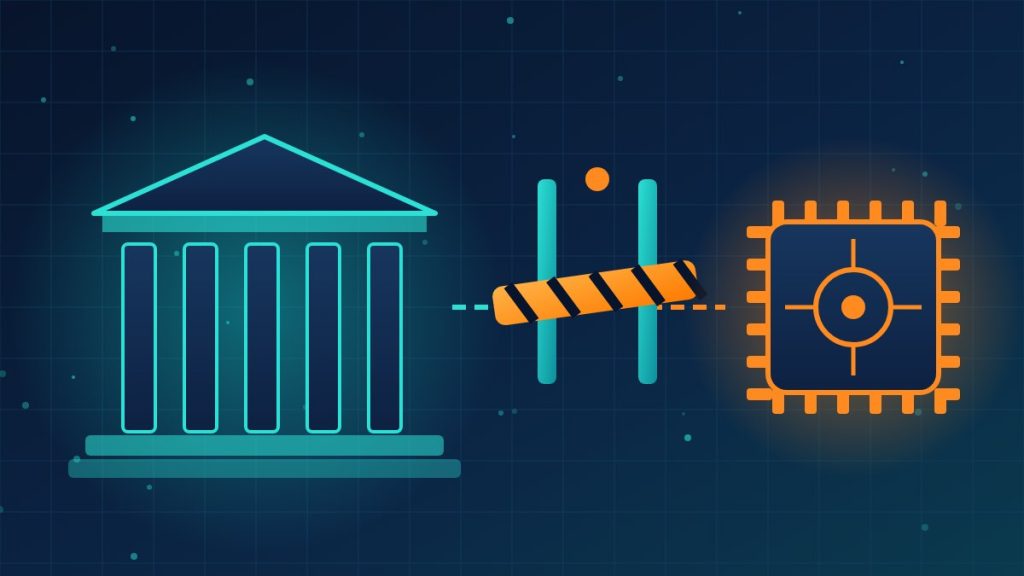
A notice scheduled to appear in the Federal Register on Tuesday makes official something the government decided months ago: the Chinese AI model DeepSeek, and everything sold by the company behind it, is out of bounds for civilian federal agencies. Below we take the main points of the order one at a time and add a short note on what each means in practice.
CyberScoop first detailed the notice and the letter attached to it, and that reporting is the basis for everything here.
1. Who and what is covered
The order: civilian federal agencies may not buy any information technology products or services from Hangzhou DeepSeek Artificial Intelligence, the model’s parent company, or its affiliates.
Our note: This goes beyond one chatbot. It covers the company’s whole IT catalog. The action rests on the federal law that governs supply-chain risks in government purchasing, following a review by the Federal Acquisition Security Council.
2. It is not new, just newly public
The order: the notice includes a letter from Homeland Security Secretary Markwayne Mullin ordering DeepSeek products excluded, dated June 26.
Our note: The ban has effectively been in force for about four months. Before this, agencies used their own discretion to block models like DeepSeek, as the Commerce Department confirmed to FedScoop last year.
3. The reasons given
The order: DeepSeek’s models present “multiple threat vectors” to agency systems.
Our note: The letter lists several. Data is kept on servers in China, where national security laws give the government broad power to demand information from local companies. Models hosted by DeepSeek itself collect personal information and track users’ online “digital fingerprints.” And the basic act of typing prompts and receiving answers could move sensitive data to Beijing. CyberScoop points out that some of these privacy and data-collection concerns could apply to other AI models too, Chinese or American.
4. Out of new purchases, and out of existing systems
The order: agencies must leave DeepSeek out of future procurements and remove any versions already in place.
Our note: It is a cleanup order as well as a purchasing rule. Any team that experimented with the model before June has to find and remove it.
5. Watch the network while you clean up
The order: until removal is complete, agencies are encouraged to monitor traffic in and out, add logging and controls against data leaving the network, and flag unusual activity.
Our note: That is guidance, not a mandate, but it signals that officials consider past use a possible exposure, not just a policy breach.
6. The escape hatch
The order: agencies can ask for an exception, but must file 60 days ahead with a “compelling justification,” such as being unable to carry out a mission-critical function, or other national security reasons.
Our note: The bar is set high on purpose. Few routine uses would qualify.
What the order does not do
- It names only DeepSeek. Other Chinese open-weight models, including Moonshot AI’s Kimi and Alibaba’s Qwen, have also worried security officials, but they are not covered.
- It applies to civilian agencies. The reporting we read does not say how, or whether, it reaches contractors and their own systems.
- CyberScoop asked DHS and CISA for more detail; their answers were not part of the report.
What this means for your company
If you sell to federal agencies, expect AI tools to show up in supply-chain questions the same way hardware and software origins already do. Find out whether DeepSeek or any other AI service is in use anywhere in your business, including browser extensions and free trials that staff signed up for on their own, and decide where company data may and may not be typed into an AI tool. Even with no government work at all, the order’s reasoning is a useful checklist for any AI service: where is the data stored, who can compel access to it, and what are you sending it?
Need help building an AI usage policy or getting your IT ready for government supply-chain requirements? Reach out to Layer 7 Data Solutions to discuss how we’ve helped companies similar to yours.
About The Author